
Care Pathways + Clinical Reference Guides
Estimated read time: Less than 10 minutes
Overview
Nourish uses Care Pathways as structured, evidence-based roadmaps that guide care across time while remaining responsive to each patient’s needs.
These condition-specific documents are developed by Nourish's Clinical Quality team to provide frameworks for care to all Nourish dietitians. Consider these living documents, as they will be continuously updated with the latest standards and published research.
All Nourish dietitians are expected to have a strong understanding of Care Pathways and Clinical Reference Guides to leverage throughout patient care.
You will find the the Reference Guides and Pathways in the Internal Resources section of the Nourish Provider Portal.
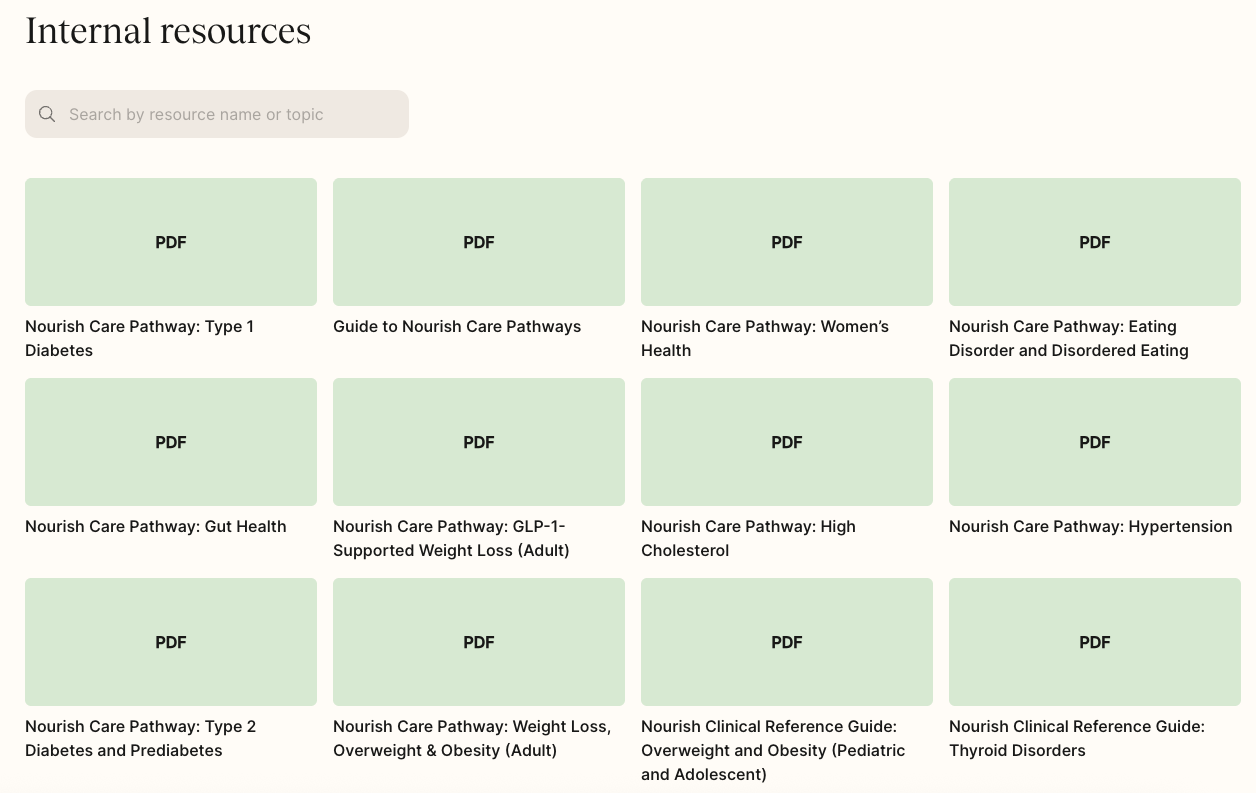
Care Pathways
Care Pathways are used in healthcare settings to outline evidence-based practices and interventions for the management of patients with a specific medical condition. They are sequential, structured, step-by-step plans that guide healthcare professionals through the patient care process. Pathways include evidence-based tools for treating each disease state. The session numbers are meant to be suggestions, as we trust you know your patients.
In some Care Pathways, we introduce eligibility criteria, including a validated screening tool for disordered eating and eating disorders. This is so that patients who come to Nourish for weight loss, but who may benefit from working with a clinician trained in disordered eating or eating disorders, are properly identified and directed. Use your clinical judgement on when to use this simple and validated screening tool. For documentation, please indicate in the chart note [other patient reported information section] if the patient has been screened and their result.
Each pathway defines:
What to assess at each phase of care
What to prioritize based on readiness and goals
How care progresses from foundation to maintenance
When to adapt, escalate, or transition care
Importantly, the phase structure is embedded directly into the Nourish chart note experience, ensuring that pathways are not just theoretical guidelines but an active part of daily clinical workflow.
This integration:
Anchors each visit to a clear phase and goal
Supports consistent documentation and clinical decision-making
Helps clinicians quickly see where a patient is in their journey
Makes progress and transitions explicit for both clinicians and patients
The result is a care experience that is cohesive, transparent, and outcome-driven - from the first visit through long-term maintenance.
Why Nourish Uses Care Pathways
Nourish uses structured clinical care pathways to ensure that every patient receives high-quality, evidence-based care that is both consistent and deeply personalized - without sacrificing flexibility or clinical judgment.
Care pathways help translate complex chronic disease management into a clear, supportive journey for patients, while giving clinicians a shared framework for delivering care that drives real outcomes.
Consistency: Shared pathways establish common clinical standards across providers and specialties, reducing variability in care and ensuring that patients receive reliable, high-quality support regardless of who they work with.
Actionability: Each phase defines clear priorities, helping clinicians focus on the most impactful interventions at the right time, rather than overwhelming patients with too much too soon.
Personalization: Pathways establish a shared clinical framework while preserving flexibility at the patient level. Within each phase, care plans are individualized based on patient goals, preferences, medical context, readiness, and response to intervention.
Outcomes-driven care: Phased pathways make it easier to track progress across clinical outcomes (e.g., A1C, weight, labs), behavioral change (e.g., meal patterns, consistency), and functional improvements (e.g., energy, symptoms, confidence).
Sustainability: By intentionally shifting focus from foundation to optimization to maintenance, care pathways help patients build skills and systems they can sustain long after active care ends.
Clinical Reference Guides
For conditions without formal Care Pathways, we offer Clinical Reference Guides as well-referenced primers for specific disease states, specific to medical nutrition therapy (MNT). While they don’t contain everything there is to know, they contain quite a lot, with plenty of references you can continue to explore.
Clinical Reference Guides serve as helpful reminders for providers who specialize in treating specific conditions/diseases, and as great introductions for providers who are new and interested in learning more.
