
Selecting Specialties & Approaches
Estimated read time: Less than 10 minutes
Dietitians are required to select specialties and approaches to facilitate matching with patients. When scheduling an appointment with a Nourish dietitian, patients select their health concerns and preferred counseling styles and are then matched with providers depending on specialty, approach, and availability compatibility.
It is critical to select specialties and approaches that accurately reflect your clinical expertise to ensure optimal patient and provider experience.
To select specialties:
Log into your Provider Portal
Click Profile on the lefthand sidebar
Within your Provider Profile, scroll down to Specialties & click Edit
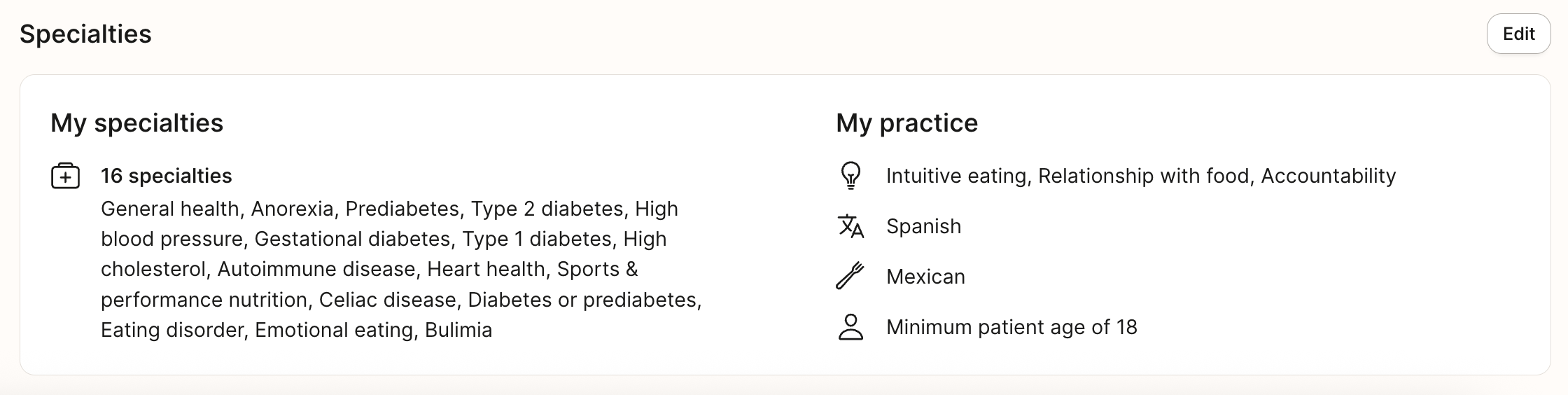
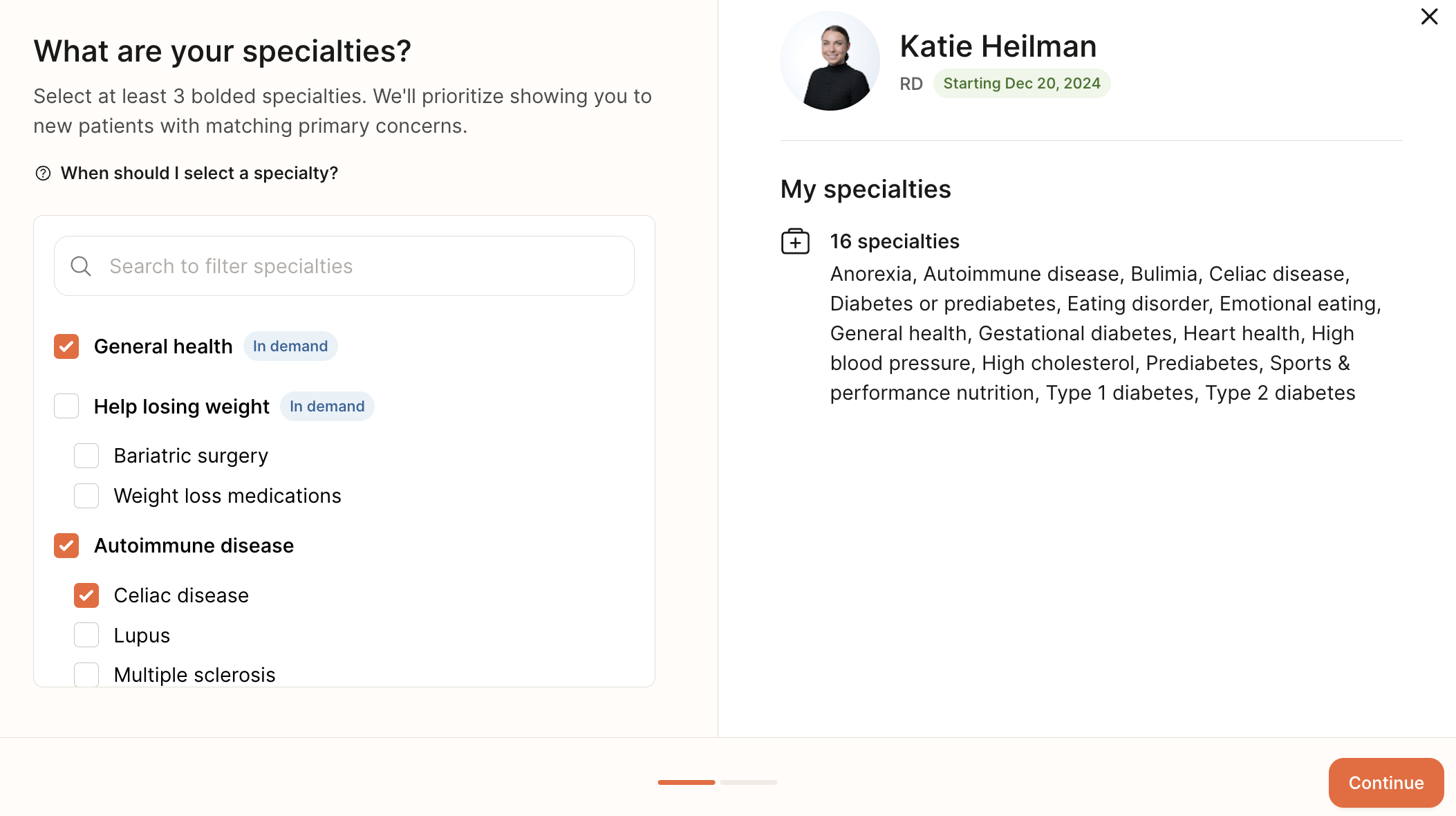
Select your specialties by toggling the orange checkmark. If you have experience in In-Demand Specialties, we highly recommend selecting them—they can increase your likelihood of patient bookings. In general, broader specialty selections mean more opportunities to be booked. Click Continue to save.
On the next page, select 2–4 approaches that best describe your practice. These approaches help patients understand how you’ll guide them on their care journey and support their health goals. They reflect how you work with patients—not just your certifications.
You can also add languages, diet and cuisine specialties, and a minimum patient age—these are optional but strongly encouraged to help match you with the right patients.
If you do not select a minimum patient age, it will default to 18.
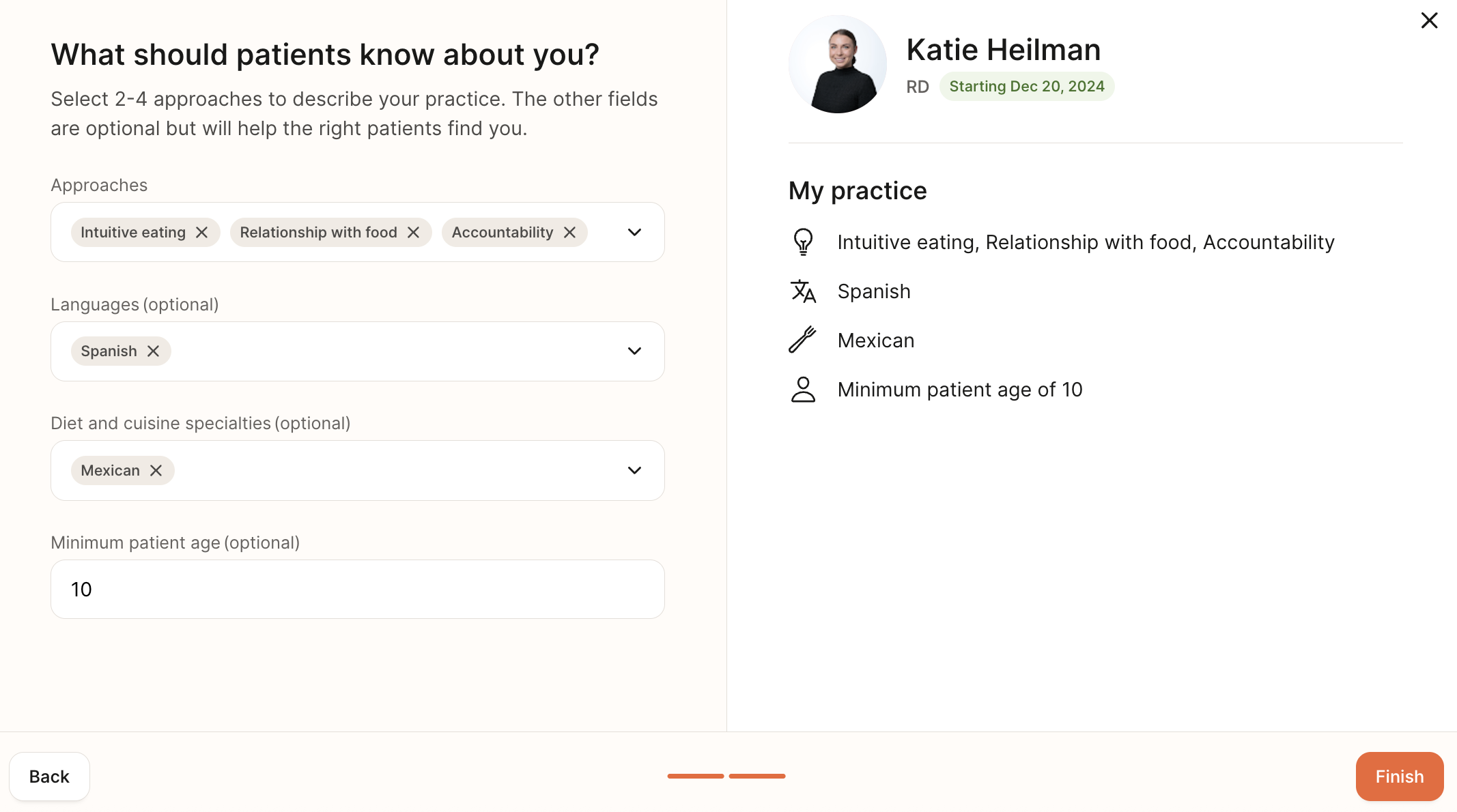
6. Once complete, click Finish to save your changes.
Questions to consider before committing to a specialty:
Answer YES to the following before choosing a specialty
Can you confidently treat this patient when seeing them for this specialty ONLY?
Do you have successful treatment or experience of this specialty in the past?
Are you comfortable with seeing 25% of your caseload in this specialty?
Can you see this specialty without a high level of clinical support?
When NOT to select a specialty:
Do not select specialties if:
You are interested in learning more about this specialty, but do not have experience treating patients with this specialty yet.
You want to test your skills in the specialty.
If you are interested in furthering your knowledge of specific specialties, please utilize our continued education benefit, Clinical Pathways, Clinical Reference Guides, and Case Review and Collaboration meetings to increase competence prior to selecting.
Frequently Asked Questions:
How many specialties should I have?
It is critical to be competent in each specialty you choose. Best practice is to select at least five specialties in total.
Should I choose the general specialty or sub-specialty?
When reviewing specialties, there can be a general specialty with several sub-specialties within it.
Choose the general specialty when competent with all or the majority of subspecialties within.
Choose sub-specialty ONLY when this is the primary diagnosis you are competent with
Example: If an RD selects Gut Health as a specialty, they should be competent and comfortable treating patients with SIBO, IBS, GERD, Ulcerative colitis, and Crohn’s disease. If the RD is only competent and comfortable with SIBO & IBS, then the RD should choose those two subspecialties instead of Gut Health.
Can I transfer patients who are not a good match?
Transferring patients is possible; however, feedback has shown that this is not the best experience for either patients or providers. Carefully select specialties to minimize patient transfers.
How do I learn about a specialty if I am not seeing those patients?
At Nourish, we encourage continued professional development & growth for dietitians and aim to provide the following peer and individual learning opportunities to support this goal for all employees:
Continued education benefit
Clinical Pathways and Clinical Reference Guides
Specialized Case Review and Collaboration meetings
RD Slack community